.png)


 to order a call
How interruptions in lighting affect cannabis plants
Related Products
Auto AK-47
Auto AK-47 Feminised — Legendary Power in an Easy Format Auto AK-47 is a hallmark of reliabilit..
200 грн.
Double Skunk Fem
Genetics and Origin of Marijuana Double Skunk Fem Double Skunk Fem by Smile Seeds is a premium fe..
575 грн.
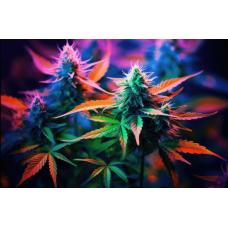
Cannabis plants are very sensitive to changes in light. Their life cycle is closely related to the amount of light they receive. Therefore, it is very important for growers to maintain a light regime to mimic natural conditions and encourage plants to enter the flowering phase at the right time. Any interruptions in lighting can disrupt the rhythm of plants, cause stress, or even lead to regression in development.
Cannabis plants respond to light intensity, spectrum, and duration of light. This affects the production of hormones that regulate growth and flowering. Under artificial lighting conditions, photoperiod can be precisely controlled. Create ideal conditions for each phase. However, instability in lighting can lead to undesirable changes in photoperiod, which will negatively affect crop yields.
The effect of insufficient lighting on photosynthesis
Light plays a crucial role in the process of photosynthesis. Any interruptions in light can have serious consequences. Insufficient lighting leads to a decrease in the efficiency of photosynthesis. This slows down the growth of bushes and reduces their productivity. When there is insufficient light, chlorophyll levels may decrease. Other pigments are also affected.
Interruptions in light disrupt the energy balance. There is a risk of weakening of plants, decreased resistance to diseases and pests. Although bushes can adapt to changes in light, sudden and frequent interruptions can cause stress and even lead to plant death. Therefore, it is necessary to ensure uniform and sufficient lighting. This way you can avoid negative consequences.
Light interruptions and plant stress
When lighting becomes unpredictable, it disrupts homeostasis and causes physiological stress. Various problems may occur, including slower growth, reduced leaf and inflorescence size, and reduced yield. Stress caused by interruptions in lighting can lead to disruption of the photoperiodic rhythm of plants, which is especially critical during the transition from the vegetative phase to flowering. Unstable lighting can cause premature or delayed flowering, which will negatively impact the quality and quantity of dry buds. To minimize stress, you can use automated light control systems that provide uniform and stable lighting. It is also important to maintain the correct light regime according to the phase of the life cycle.
Long-term effects of unstable lighting
Prolonged interruptions in light can lead to changes in the genetic expression of plants. This can affect the ability of bushes to adapt to the environment, resistance to disease, and ability to reproduce. Unstable lighting negatively affects yields. The risk of product quality deterioration increases. Fewer inflorescences develop. The content of cannabinoids and terpenes decreases.
In order to avoid such negative consequences, experienced growers take care of backup sources of electricity in advance.
