.png)

 to order a call
10 key parameters for creating optimal conditions for growing cannabis in the open field.
Growing cannabis outdoors is a great way to get healthy and strong plants.



Description and characteristics of the variety White Widow fem is a strongly relaxing indica-domi..
774 грн.
Genetics and Origin of Marijuana Double Skunk Fem Double Skunk Fem by Smile Seeds is a premium fe..
575 грн.
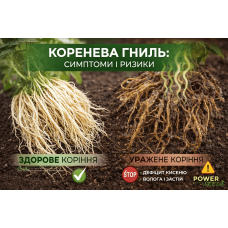
Fall leaves for no apparent reason, slow growth, and a strange "swampy" smell near the substrate are signals that should not be ignored. Very often, they are caused by root rot: a condition in which the roots lose access to oxygen, weaken, and become vulnerable to pathogens. For any crop (including industrial hemp), this is critical: a damaged root system absorbs water and elements worse, and the plant spends energy on survival instead of development.
Disclaimer: the material is for informational purposes only and concerns the care of legal crops and general principles of phytosanitary care. Follow the laws of your jurisdiction.
Root rot is not "one disease," but rather a chain reaction. First, there is a lack of oxygen in the root zone: excessive moisture, stagnant water, poor drainage or an overheated environment reduce aeration. Then the roots begin to lose density, darken and “soften”, and pathogenic microorganisms receive ideal conditions for development. As a result, the transport of water and nutrients is disrupted, and the plant shows symptoms similar to starvation or overflow.
The most common scenario is a combination of moisture and lack of air. Overflow “on the machine”, dense substrate, lack of perlite/exfoliants, poor drainage, heavy soil mixtures or prolonged dampness in the room - all this increases the risks. In water systems, an additional trigger is stagnation of the solution and unstable temperature: pathogens multiply faster in warm, poorly aerated water.
At first, the problem is disguised as “ordinary stress.” Leaves may lose elasticity even with normal watering, the lower tier turns yellow, and the overall growth dynamics become sluggish. There is often a feeling that the plant is “overwatered,” although the care schedule has not changed. This is due to the fact that the affected roots no longer work as a pump — there is moisture, but the movement through the vessels weakens.
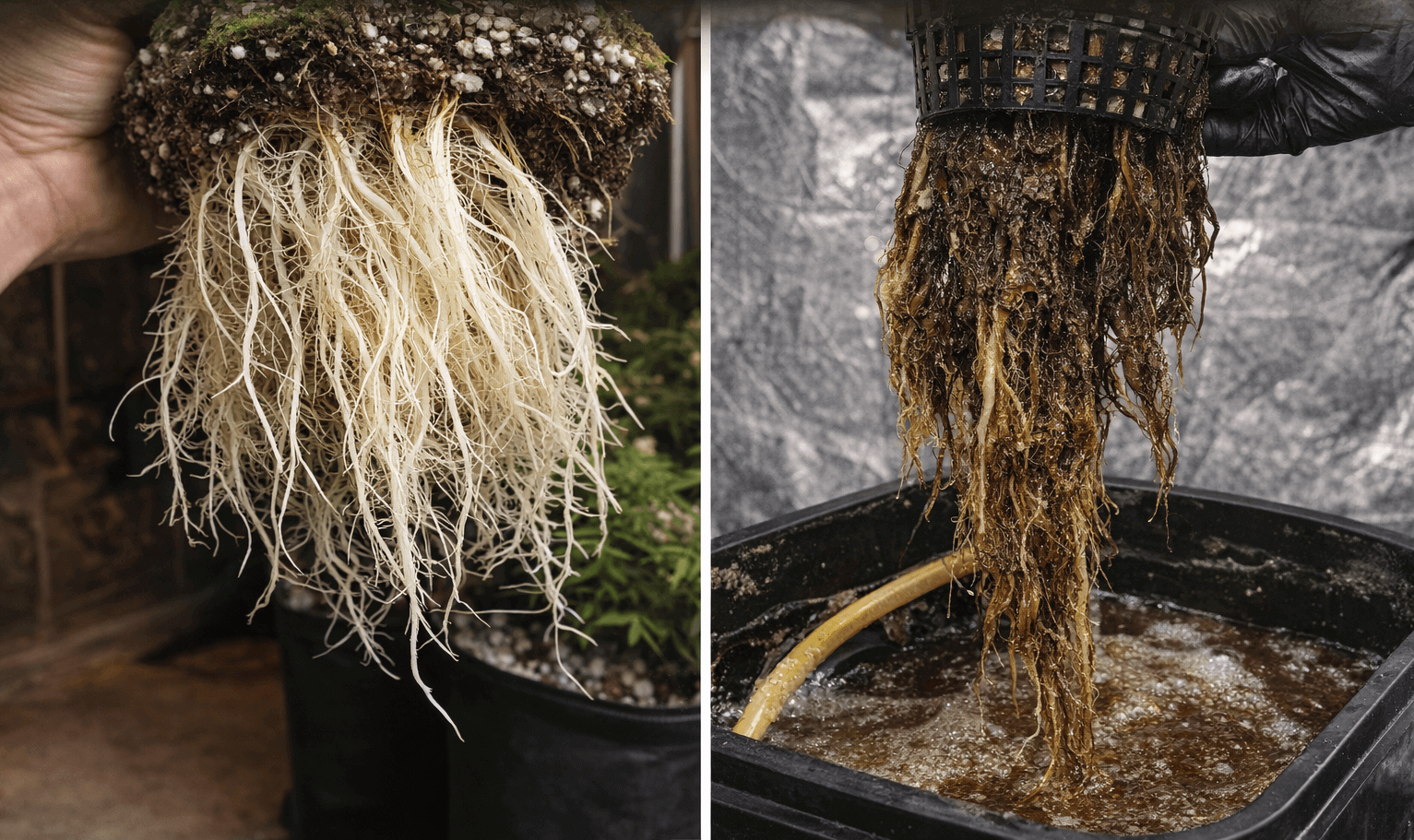
The most obvious marker is the condition of the roots. Healthy roots are usually light, dense, without mucus and a pungent odor. If the roots are brown/gray, soft, sticky to the touch, and there is a “swampy” aroma nearby, the risk of root rot is high. It is important not to wait until the symptoms become widespread: the sooner you stabilize the root zone, the easier it is for the plant to recover.
Visual signs: darkening, mucus, clumping of roots, unpleasant odor.
In soil mixtures, root rot often develops more slowly, because the substrate usually has a “buffer” in the form of air pores. But if the soil is heavy, compacted, or constantly wet, the root zone quickly becomes anaerobic. Then typical signals are observed: prolonged humidity, sour smell from the pot, regular "pseudo-deficiencies" (as if there is a lack of elements, although there is nutrition).
In aquatic systems, the problem can start abruptly: in a short time the plant "lies down", and the roots change color and structure. The cause is usually a combination of stagnation and overheating of the environment or insufficient aeration. That is why monitoring the cleanliness of the system, the stability of the environment and air exchange is the key to a healthy root zone.
The best strategy is to act calmly and systematically. You should not "rush" into radical changes in care: sharp fluctuations only increase stress. It is much more effective to return to the root zone what it has lost - oxygen, stability and hygiene. If you see that the substrate does not dry out, there is stagnation of water or poor ventilation - this is the first point of attention.
In the practice of plant care, it is also important to avoid a "double load": excess moisture + high concentration of fertilizers often worsen the situation. When the roots are weakened, they absorb elements worse, and aggressive feeding may look like a "salvation", but in fact it adds stress. In such situations, moderation and control of basic conditions win.
Prevention is always cheaper than "treatment": aeration and humidity control are the basis.
After any stressful episode, the main thing is not to repeat the conditions that triggered the problem. For most home scenarios, simple rules work: predictable watering, a substrate with adequate structure, drainage, cleanliness of tools, and a stable microclimate. Special attention should be paid to ventilation: air exchange supports the health of not only the leaves, but also the root zone, because it stabilizes evaporation.
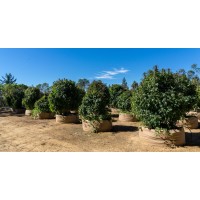
Growing cannabis outdoors is a great way to get healthy and strong plants.
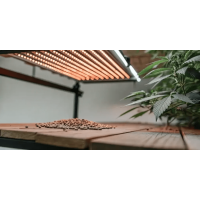
In the world of cannabis cultivation, there have always been small rituals that are spoken about quietly, but with a twinkle in their eyes. One of these is the so-called “3 days of complete darkness before harvest”.
Заполните форму
