Pioneers of Cannabis Culture
Related Products
People who changed attitudes about the plant
Today, cannabis is increasingly discussed in the context of science, business, breeding, medicine and legislation. But the modern industry did not arise on its own. Long before the emergence of big brands, investment funds and legal markets, there were people who spoke out about the plant when it could cost them their careers, freedom or reputation.
Some were activists, others wrote books, made films, created magazines or helped change laws. Some have worked with cannabis culture through humor and music, while others have worked through politics and public campaigns.
On the Power Seeds blog, we will remember a few people without whom modern cannabis culture could look very different.
Tommy Chong: When Cannabis Became Part of Pop Culture
Tommy Chong is one of the most recognizable figures in cannabis culture. For many, his name is inextricably linked with the duo Cheech & Chong and the film Up in Smoke, which was released in the late 1970s.
Before this, cannabis in mainstream cinema was often presented as either a dangerous topic or remained outside the scope of popular culture altogether. Cheech and Chong made it a part of comedy, youth humor and counterculture.
However, Tommy Chong's story is not limited to cinema. He publicly supported the reform of cannabis laws for many years, and in the 2000s he even served a prison sentence in the United States for a case related to the sale of smoking accessories.
For cannabis culture, his contribution is primarily that he helped make the topic less taboo. What was once discussed only in closed companies has gradually become part of mass culture.
Mark Emery: Activism, Seeds and the Canadian Legalization Movement
Mark Emery is one of the most famous figures in Canadian cannabis activism. He was often called the "Prince of Pot" in the press.
In the 1990s, Emery openly sold cannabis-related products, and later began selling seeds. In those years, such activities were under serious legal pressure.
At the same time, he developed a media direction. In 1995, the magazine Cannabis Canada appeared, which later became Cannabis Culture. The publication became one of the prominent information platforms for supporters of legal reform.
Emery also participated in the creation of political movements related to the legalization of cannabis in Canada. His stores were raided several times, and the activist himself had problems with the law, but he continued to publicly defend his position.
For the history of the hemp seed market, this figure is also interesting because he was one of the people who made international trade in genetics part of the open cannabis culture of the 1990s.
Jack Herer: the man after whom the legendary variety was named
Many people first encounter the name Jack Herer in a seed catalog. But long before the famous variety appeared, Jack Herer was one of the most famous American activists.
His main work was the book The Emperor Wears No Clothes. In it, Herer attempted to show the history of hemp use, its industrial potential, and the political reasons for cannabis prohibition.
For many years, he spoke at rallies, participated in public campaigns, and called for a review of marijuana and industrial hemp policies.
His influence was so significant that the Jack Herer variety was later named after the activist. Over time, this genetics became one of the most famous in the world, and its name has effectively become a living monument to the man who for decades promoted the idea of legalization.
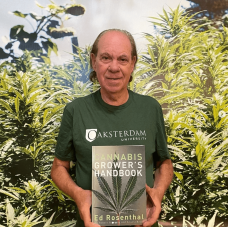
Ed Rosenthal: Grower, Author, and Educator for an Entire Generation
Ed Rosenthal holds a special place in the history of cannabis culture. If Jack Herer is more associated with political activism, Rosenthal became one of the main popularizers of practical knowledge about the plant.
In the 1980s and 1990s, he was closely associated with the magazine High Times, where he published materials on cultivation, genetics and plant care.
Rosenthal wrote and co-authored many books. His growing guides were read by millions of enthusiasts in different countries. For a generation that did not yet have access to YouTube, forums and large online knowledge bases, such books were practically desktop textbooks.
He also supported legal reform and was associated with the medical cannabis movement in California. His court cases were widely covered by the American media and further drew public attention to the contradictions between federal and local laws.
Snoop Dogg: From Music to Cannabis Business
Snoop Dogg's connection to cannabis culture is so obvious that it has long become part of his public image. However, his influence extends far beyond the mere mention of marijuana in his music.
For decades, Snoop Dogg has helped normalize the topic of cannabis in hip-hop and popular culture. When laws in individual American states began to change, he was one of the first major artists to turn this cultural influence into a business.
In the 2010s, he launched the Leafs By Snoop brand and participated in the development of media and commercial projects related to cannabis.
A separate direction was the venture fund Casa Verde Capital, which invests in companies operating around the legal cannabis industry.
Snoop Dogg is interesting because he symbolizes a new stage in the development of culture: the transition from underground and activism to legal business, technology and large investments.
Brownie Mary: a symbol of the medical cannabis movement
Mary Jane Rathbun, better known as Brownie Mary, has become one of the most unusual figures in the American medical cannabis movement.
In San Francisco, she baked brownies with cannabis and gave them to people suffering from serious illnesses, including HIV/AIDS patients.
Her activities repeatedly led to arrests. However, each new case drew media attention not only to Mary herself, but also to the issue of access to cannabis for seriously ill patients.
She was not a major entrepreneur or a famous politician. On the contrary, she financed a significant part of her activities from very limited personal funds. That is why Brownie Mary became a symbol of grassroots activism - a movement that was formed from below, by ordinary people.
From activists to modern industry
The history of cannabis clearly shows how much society's attitudes can change in a few decades. What Tommy Chong, Mark Emery or Brownie Mary got into trouble with the law for has now become part of the legal market in certain countries and regions.
At the same time, it is important not to lump all pioneers into one category. Some were involved in politics, others in culture, others in education or patient care. Their views, methods and motives were different.
They had one thing in common: they talked about cannabis openly long before this topic became acceptable for big business.
How the history of cannabis is connected to modern genetics
For the buyer of marijuana seeds, this history may seem far from modern seedbank catalogs. In fact, the connection is direct.
Many famous genetic lines were named after people, places and events associated with cannabis culture. The most obvious example is Jack Herer. Today, there are photoperiod, autoflowering and derivative versions of these genetics from various breeders.
Old seed banks, magazines like High Times, Cannabis Cup, activists and breeders together shaped the environment in which the modern genetics market became possible.
Power Seeds: Know not only the strain, but also its history
At Power Seeds, we believe that choosing seeds is not just about comparing THC, flowering times or genetic type. There is a whole story behind many famous names.
That is why in our blog we talk not only about hemp seeds, seed banks and strain characteristics, but also about the people who influenced the development of cannabis culture.
Understanding the origin of genetics often makes choosing much more interesting. Jack Herer is no longer just a name on the packaging, and Cannabis Cup is no longer just a logo next to the strain description.
FAQ
Who is Jack Herer?
Jack Herer is an American activist and author of The Emperor Wears No Clothes. He has been advocating for cannabis and industrial hemp law reform for many years. The famous Jack Herer strain is named after him.
Why is Tommy Chong important to cannabis culture?
Tommy Chong, along with Cheech Marin, helped make cannabis a part of mainstream comedy and pop culture back in the 1970s.
Who is Ed Rosenthal?
Ed Rosenthal is an American author, grower, and activist known for his numerous books and publications on cannabis cultivation.
Why does Jack Herer exist?
The strain was named after activist Jack Herer in recognition of his contributions to cannabis culture and the legalization movement.
What is the connection between the history of cannabis and modern seed banks?
Modern breeding has evolved in parallel with cannabis culture, magazines, Cannabis Cup, activism and genetic sharing. Therefore, many modern strains have a direct connection to events and people of past decades.
.png)


 to order a call