Proper cannabis transplant
Related Products
In most cases, the garden starts with small containers. This is convenient: it is easier to control the humidity, temperature and the start-up process itself. But sooner or later the plant grows so much that it becomes cramped - and then it is no longer possible to do without a transplant.
If you do everything right, a transplant will only help the plant: the root system will become stronger, and development will be more stable. But if you make a mistake, you can easily get stressed and lose growth rate.
When exactly to transplant
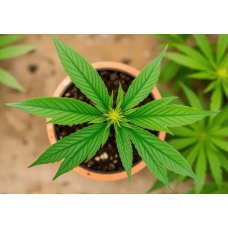
There are several clear signals that show that the time has come. The simplest is the development of the plant itself. If 4–5 pairs of leaves have already formed, then the roots are actively growing and need more space.
The second point is the roots. If they start to look out of the drainage holes or the soil dries out too quickly, the pot is already small. In this state, the plant simply will not be able to develop normally.
It is also important not to delay flowering. It is best to transplant in advance so that the plant has at least a week or two to adapt.
How much space is needed
After transplanting, the new pot should be at least twice as large as the previous one. This reduces the risk of stress and gives the roots room to grow.
For medium-sized indoor plants, containers of about 15–20 liters are often used. In open ground, a plant can generally take up much more space - there are almost no restrictions there.
It is important to understand: the more space the root system has, the more stable the plant itself grows and the better the final result.
How to transplant correctly
Transplanting is always stress, but it can be minimized. The main rule is to do everything carefully and without sudden movements.
Before starting, slightly moisten the soil. It should not be wet, but a dry lump is also a bad option. Next, prepare a new container with a loose substrate and a place for the old root ball.
The plant should be pulled out with the ground, without breaking it up. The less you touch the roots, the better. Transfer to a new pot, fill it up around the edges, and water immediately.
After transplanting, you should not put the plant under strong light or stressful conditions. Give it some time to adapt.
Typical mistakes that are best avoided
The most common problem is transplanting too early. Young plants are still weak and may simply not be able to withstand such stress.
The second mistake is damaging the roots. If you scatter the soil or “clean” the roots, it will almost certainly slow down development.
And another point is excessive watering after transplanting. Many people think that more water is needed, but this only harms.
Give the plant enough space, work carefully — and it will thank you with stable growth and good results.
.png)


 to order a call