.png)


 to order a call
TOP 10 mistakes beginners make when growing cannabis
Related Products

Bright Star
Variety description and characteristics Bright Star is a self-dominant hybrid with a high THC con..
1 075 грн.

AMNESIA HAZE
Amnesia Haze — The Quintessence of Sativa Power and Productivity Amnesia Haze by DutchBulk Seed..
946 грн.
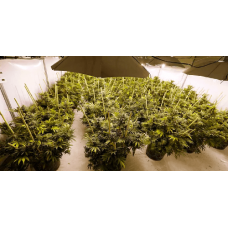
Growing cannabis often seems like a simple process, especially in theory. However, in practice, most beginners face the same difficulties that can negate all their efforts. Mistakes at the start usually cost not only time and money, but also a complete loss of results. In this article, we will take a detailed look at the ten most common beginner mistakes that can be avoided if you know about them in advance.
1. Using seeds with poor or questionable genetics
No technology, fertilizer, or experience can compensate for poor genetics. If the seeds have an unstable origin, the plant may grow unevenly, have weak immunity, or not realize its potential at all. Beginners often make the mistake of choosing seeds based on the principle of "cheaper" or without checking the origin. In fact, it is genetics that determine the yield, stability, and quality of the future result. Reliable, original seeds are the foundation of the whole process.
2. Using regular soil instead of a special substrate
Cannabis is a plant with special requirements for the root zone. Regular soil is often too dense, poorly permeable to air and retains water. This leads to a lack of oxygen, stagnant moisture and the risk of root diseases. The right substrate should be light, loose and well-drained. This is especially important for autoflowering varieties, which are sensitive to overfeeding and stress in the early stages of development.
3. Incorrect lighting height
Light is a key growth factor. If the light source is placed too high, the plant stretches out, forms a weak stem and spends energy inefficiently. If the lamp is placed too close, the leaves receive heat burns, which slows down photosynthesis. The correctly selected distance to the lamp ensures compact growth, a strong structure and uniform development of inflorescences.
4. Overfeeding or nutrient deficiency
One of the most common mistakes is the desire to “feed better.” Cannabis is very sensitive to the concentration of nutrients. An excess of fertilizers can cause blockage of the absorption of trace elements, and a deficiency can cause growth retardation and loss of leaf color. It is important to follow the recommended feeding schemes and learn to notice the signals that the plant gives.
5. Lack of rinsing before harvesting
Many beginners ignore rinsing, considering it unnecessary. In fact, proper rinsing before harvesting helps to remove residual salts and improves the purity of taste and aroma. Without it, the final product often has a sharp aftertaste and reveals the terpene profile worse. This is one of the key points that distinguishes a mediocre result from a high-quality one.
6. Wrong Harvest Time
Harvesting too early or too late can drastically change the effect and quality. It is a mistake to rely solely on the calendar. The real clues are the trichomes and pistils. They are the ones that allow you to determine the optimal moment when the plant has reached peak maturity and is ready to harvest.
7. Ignoring basic safety rules
Growing combines electricity, water and heat in one space. Improperly laid cables, overloaded extension cords or moisture near the sockets create serious risks. Safe organization of the space is not a formality, but a necessary condition for a stable process.
8. Incorrect pH level
Even the perfect fertilizers will not work if the pH level goes beyond the permissible limits. In this case, nutrients become unavailable to the roots. Regular pH monitoring helps to avoid deficiencies and maintain the health of the plant at all stages of growth.
9. Lack of preparation and systematic approach
Many beginners start without a plan, hoping for luck. However, growing cannabis is a sequential process where every little thing is important. Basic knowledge of growth phases, lighting, and nutrition can help you avoid most common mistakes.
10. Excessive openness and carelessness
One of the most common causes of problems is excessive talkativeness. Even in a friendly circle, it is not always worth sharing all the details. Caution and responsibility are an important part of the approach to any process.
Most beginner mistakes are not related to the complexity of growing, but to a lack of information and haste. High-quality genetics, the right substrate, stable lighting, and attention to detail form the basis of a successful result. A calm, thoughtful approach always gives a better effect than experiments without understanding the process.
