.png)

 to order a call
10 key parameters for creating optimal conditions for growing cannabis in the open field.
Growing cannabis outdoors is a great way to get healthy and strong plants.


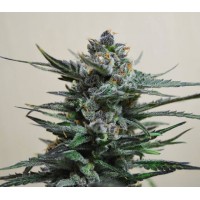
Cannabis Seeds Blueberry Auto Blueberry Auto by Amsterdam Seeds is a legendary autoflowering hybr..
679 грн.
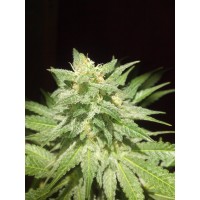
Auto Afghan Kush — Afghan Genetic Power in an Autoflowering Format Auto Afghan Kush by DutchBul..
946 грн.
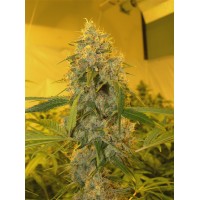
Chocolope — Chocolate Sativa and an Endless Source of Creativity Chocolope by DutchBulk Seeds i..
946 грн.

We give you the opportunity to choose the best variety thanks to a wide and varied assortment. Consi..
258 грн.
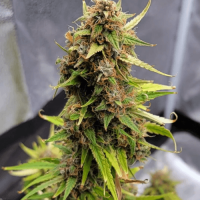
Genetics and Origin of Marijuana AK 47 Auto The AK 47 Auto strain is an autoflowering version of ..
520 грн.
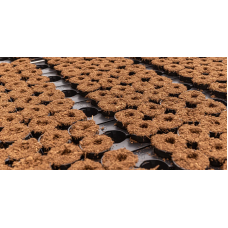
Coconut substrate or coco coir has become one of the most popular media in modern cannabis culture. It is actively used both in small home grow boxes and in large automated systems. The reason for its popularity is very simple - coconut retains moisture well, provides oxygen access to the roots and allows for better control over the growing process.
A few years ago, most people used mainly classic soil. Today, the situation has changed. Coco coir is increasingly chosen due to its stability, lightness and versatility. It can be used alone, mixed with perlite or integrated into hydroponic systems.
Despite the popularity of coconut substrate, working with it requires a little more attention than classic soil. It is important to control the pH, nutrition and salt levels. But if you understand the basic principles, coco coir can give very good results.
Coconut substrate is made from the shell of coconuts. Previously, this material was considered ordinary waste, but over time it began to be actively used in gardening and modern plant growing.
The main feature of coco coir is its ability to simultaneously retain moisture and pass air well. This is very important for the root system, because the roots need not only water, but also oxygen access.
Unlike classic soil, coco does not compact so much over time. Thanks to this, the root system develops more actively, and the plant itself receives more stable conditions.
One of the main reasons for the popularity of coco coir is its versatility. It is used both in small home setups and in large automated greenhouses.
Another important advantage is a good balance between moisture and aeration. Classic soil can sometimes become too dense, which is why the roots receive less oxygen. Coconut coir remains looser and more stable.
Coco coir is also considered a more environmentally friendly option compared to some other substrates. That is why its popularity in modern cannabis culture continues to grow steadily.
Despite the large number of advantages, coco coir cannot be called the ideal solution for everyone. Unlike soil, coconut contains practically no nutrients. Because of this, you have to control nutrition more carefully.
It is also important to constantly monitor the pH. If the indicators go beyond the norm, the plant may absorb nutrients worse. For beginners, this sometimes becomes a problem.
Another difficulty is the accumulation of salts. If you do not periodically water or choose the wrong fertilizer, mineral residues can accumulate in the substrate.
Today, coco coir is sold in several formats. The most popular are pressed briquettes, ready-made mixtures and small tablets for germination.
Pressed briquettes must be soaked in water before use. After that, they increase in size and become loose. Many people choose this format because of the convenience of transportation and storage.
Ready-made mixtures often already contain perlite or other components to improve aeration. This is a good option for those who do not want to mix the components separately by hand.
Before use, the coconut substrate must be properly prepared. Some cheap options may contain residual salts that can negatively affect the plant.
Usually, coco coir is first washed with clean water, and then buffered with a calcium and magnesium solution. This helps stabilize the medium and prepare it for use.
Many experienced people also recommend adding perlite. This helps make the substrate more airy and improves drainage.
When growing in coco, it is very important to properly control watering. Coco coir dries out faster than classic soil, so the watering regime here is slightly different.
The pH is also of great importance. For coco substrate, the optimal range is usually considered to be around 5.8–6.2. It is within these limits that the plant best absorbs nutrients.
To avoid the accumulation of salts, many people periodically water with clean water. This helps maintain a more stable environment.
Since coco coir contains virtually no nutrients, all nutrients must be applied separately. Nitrogen, phosphorus, potassium, calcium, and magnesium are especially important.
Many people use liquid fertilizers, as they are quickly absorbed and allow for better control of nutrition. Schemes with regular addition of Cal-Mag remain particularly popular.
The main rule is not to overfeed the plant. Excess fertilizer in coco can accumulate quite quickly.
One of the most common mistakes is incorrect pH control. Even good fertilizers will not give a normal result if the indicators go beyond the norm.
Another problem is incorrect watering. Some people overdry the substrate or, conversely, constantly overwater it.
Many beginners also forget about calcium and magnesium. This is very important for coco, because without additional Cal-Mag, deficiencies may appear.
Yes, coco coir substrate is often reused. After the cycle is complete, it is washed with clean water, root residues are removed and buffered again with calcium and magnesium.
This allows you to significantly reduce costs and make cultivation more economical. That is why coco coir is often reused.
The main thing is to clean the substrate well before reusing it and check its condition.
Today, coconut substrate remains one of the most popular options in modern cannabis culture. It combines humidity control, oxygen access to the roots, and environmental stability.
Despite the fact that coco coir requires a little more attention than classic soil, many people choose it because of its good results and versatility.The material is for informational and educational purposes only. The information is provided for the study of modern methods of growing and developing cannabis culture.
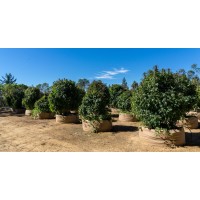
Growing cannabis outdoors is a great way to get healthy and strong plants.
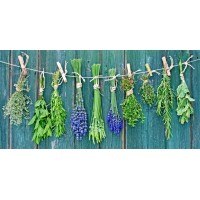
Outdoor cannabis cultivation often suffers from insect attacks that can potentially interfere with their development. This is completely natural because the environment contains a great deal of biodiversity that is essential for the balance of the Earth.

Cannabis is one of the most researched plants due to its unique composition and effects on the body. In particular, its ability to alter brain functions has piqued the interest of scientists, doctors, and the general public. But how exactly does cannabis affect our brain? Let's take a closer look.
Заполните форму